Solar Panels in El Campello
El Campello runs along a long coastal strip north of Alicante — the town's own tourism pages describe 23 km of coast. That means two very different projects under one municipality: shared roofs on the Muchavista seafront, and small, multi-pitched roofs on the slopes of Coveta Fumà. We handle both, and the paperwork with the Ayuntamiento de El Campello.
Sun, sea air and orientation
Coastal exposure here is genuinely open, which is good for production and hard on hardware. Salt-laden air means marine-grade fixings and corrosion-resistant components are the baseline specification, not a paid upgrade. On the slopes above the sea, roofs are often split into several small planes facing different ways, so the design becomes several strings rather than one clean array.
Apartments, communities and hillside houses
On the seafront most properties are flats in owner communities, where the roof is shared and the project runs through the junta — often as collective self-consumption. Inland and uphill you find detached houses with pools, AC and increasingly a wallbox, where the daytime load lines up well with the production curve. Which of the two you are decides everything about the quote.
Tax and permits in El Campello
Curious about the numbers? See full solar panel cost for Costa Blanca villas — transparent packages from €4,500 with installation, permits and 25-year warranty included.
El Campello: from the tram corridor to the hillside plots
El Campello stretches along a long coastal strip — the municipality's own tourism pages describe 23 km of coast — so the properties here are anything but uniform. A seafront apartment on Muchavista and a hillside house in Coveta Fumà are two entirely different solar projects.
- Platja Muchavista and the tram corridor. The seafront is dominated by apartment blocks and owner communities, served by TRAM Line 3 along the coast. Roofs are shared, so the route usually runs through the comunidad de propietarios rather than a single owner.
- Coveta Fumà. Sloping streets and split-level houses above the sea. Roof planes here are often small, multiple and differently oriented — the design ends up as several strings rather than one clean array.
- Cala d'Or, L'Amerador and La Almadraba. Residential nuclei with detached and semi-detached housing near the coast. Salt-laden air is a permanent factor: marine-grade fixings and corrosion-resistant hardware are standard, not an upgrade.
- Town centre, La Merced and Barrio Bonny. The older urban fabric around the centre and the port. Compact roofs, terraces in use, and neighbours close by — placement is agreed before installation rather than improvised on the day.
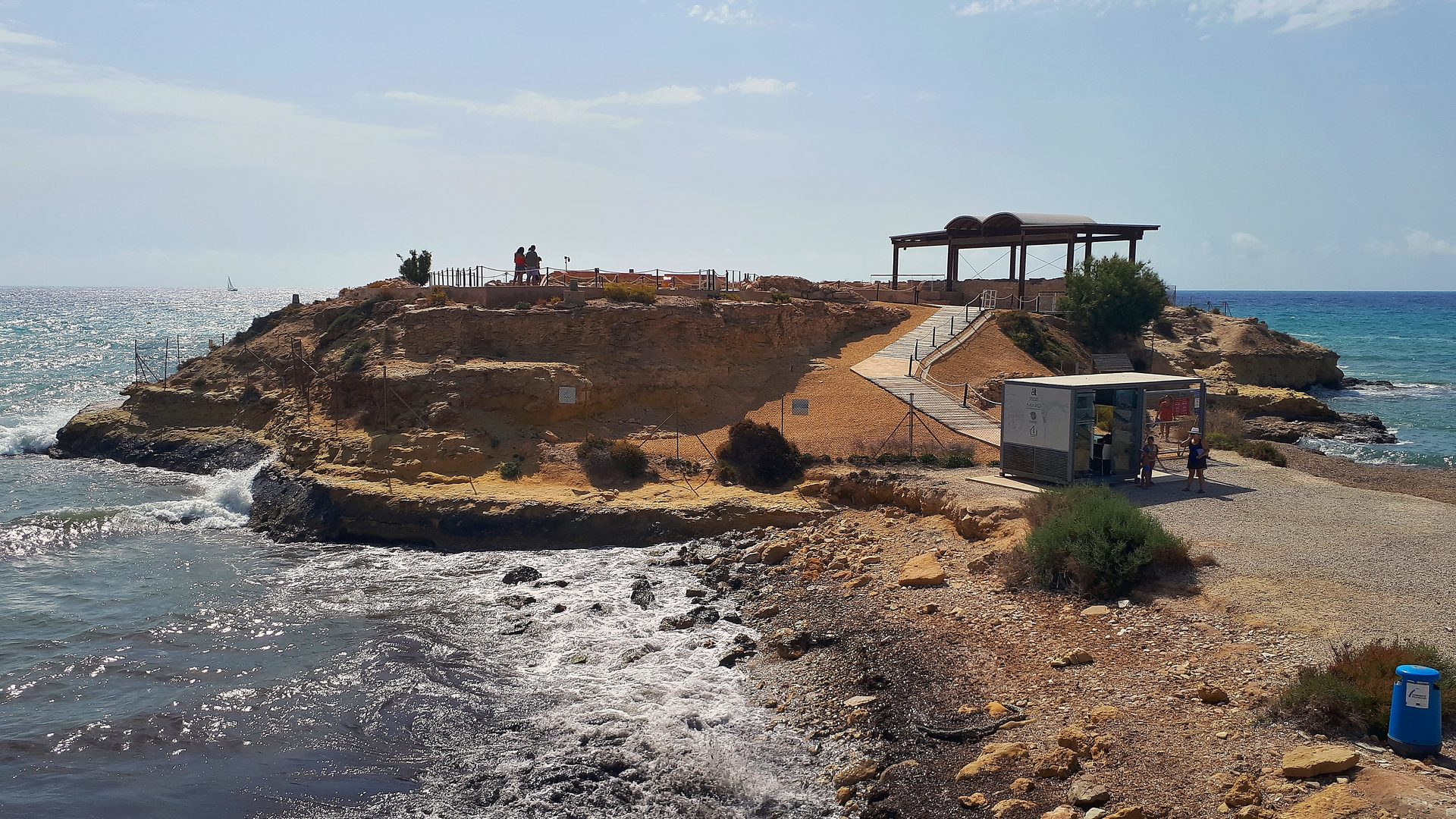
- Illeta dels Banyets and the port area. The promontory with the archaeological site marks the centre of the coastline. Properties nearby are fully exposed to sea wind, which affects both mounting-system choice and ballast calculations on flat roofs.
Consumption profiles differ just as much: permanent residents in the town, seasonal use in parts of the beach front, and year-round households in the hillside urbanisations. We size from your own bill, not from a municipal average.
FAQs — El Campello
Related guides for villa owners
Owners in El Campello
"The community paperwork was prepared before the junta, so the vote was about a real proposal rather than a vague idea."
Community owner, El Campello
El Campello